
Availability:
Low stock

The RoofBunk Explorer is built for users who value comfort, space, and simplicity.
This guide explains how the Explorer performs in real-world conditions, including sleeping comfort, weather durability, driving impact, and long-term maintenance.
The Explorer’s fold-out hinge system makes setup straightforward, even for one person.
Releasing the straps and extending the ladder deploys the tent in less than three minutes.
The ladder doubles as a structural support, keeping the base platform stable once extended.
Closing the tent is equally simple: fold the ladder inward, guide the fabric in evenly, and zip the PVC travel cover.
The soft-shell folding design is forgiving to use — even in light wind — making it suitable for both experienced campers and first-time roof-tent users.
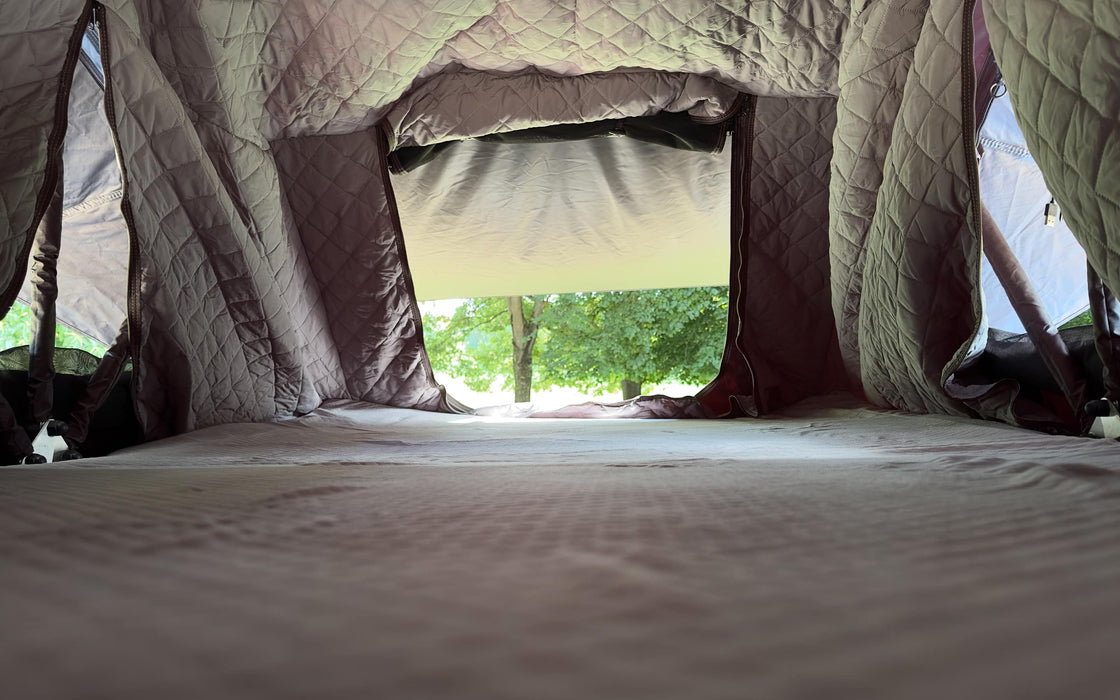
The sleeping platform supports a 6 cm high-density foam mattress, which provides consistent comfort across the base.
The interior offers generous headroom and three-sided windows for light and airflow.
All openings include mosquito mesh and blackout panels, maintaining privacy and ventilation simultaneously.
In colder weather, the poly-cotton canvas retains warmth effectively. Adding a thermal underlay or insulation liner increases comfort during sub-zero nights.
The Explorer’s 280 gsm ripstop poly-cotton fabric and PU-coated waterproof layer (3000 mm rating) offer strong weather protection in sustained rain.
Water runoff is supported by angled canopy poles, while double-stitched and heat-sealed seams prevent moisture ingress.
Wind stability remains reliable in gusts up to 30 mph when properly tensioned.
For best results, orient the ladder side away from prevailing wind and ensure guy ropes are taut when camping in exposed areas.
During hot weather, the breathable fabric prevents condensation and keeps interior temperatures manageable.
At around 55 kg, the Explorer has minimal effect on fuel efficiency or handling when mounted on correctly rated roof bars.
The folded PVC cover creates a low-profile silhouette that reduces drag and road noise.
On most vehicles, clearance remains under 2 m, allowing entry into standard car parks and garages.
After long drives, check that all U-bolts and brackets remain secure — especially after off-road travel.
Packing the Explorer is quick once the folding motion is familiar.
Remove canopy poles and fold fabric inward.
Collapse the ladder slowly, ensuring the base plates fold evenly.
Pull down the canvas and secure the PVC cover.
Tighten all straps to prevent flapping during transit.
When not in use, store the tent in a dry environment with the cover slightly unzipped for ventilation.
Clean the fabric before storage to prevent mildew or odour buildup.
The combination of a powder-coated aluminium frame, ripstop fabric, and stainless-steel hardware gives the Explorer excellent longevity.
Routine maintenance — tightening fixings, cleaning fabric, and lubricating hinges — ensures continued smooth operation for many seasons.
Even after extended use, the base panels and ladder joints maintain strength and stability with minimal wear.
The RoofBunk Explorer delivers a solid balance of space, comfort, and portability.
Its durable materials, quick setup, and low on-road impact make it a dependable choice for couples, families, and touring campers who value practicality over complexity.

{"one"=>"Select 2 or 3 items to compare", "other"=>"{{ count }} of 3 items selected"}


